The Queue to Nowhere
In Addis Ababa, moving forward in life is not shaped only by how hard you study or work. Sometimes, it comes down to something much simpler and more frustrating: luck.
I grew up watching my parents chase what should have been a basic milestone: a place to call home. They saved carefully, gave up small comforts, and stretched every birr toward the hope of getting a government condominium. But over time, something didn't add up. No matter how disciplined they were, there was always a sense that effort alone wasn't enough. In the end, everything depended on whether your name came out of a lottery.
What I didn't understand as a child and only came to see clearly later is that the lottery is not a flaw in the system. It is the system. The randomness is not a bug that crept in through poor implementation. It is the logical endpoint of a housing model built on state monopoly over land, financing mechanisms designed for a formal economy that most residents don't participate in, and construction pipelines held hostage to foreign exchange shortages. Remove any one of those structural features and the lottery becomes unnecessary. Keep all three and the lottery is the only honest way to describe what's happening: the government has promised more than the system can deliver, and the gap is resolved by chance.
This essay argues that Addis Ababa's housing crisis is not a shortage problem. It is a design problem. The bottlenecks are specific, the mechanisms are identifiable, and comparable cities have broken out of them. Understanding how requires looking carefully at what actually produces delay, who benefits from its continuation, and what a system built around delivery rather than administration would look like.
What the Numbers Don't Say
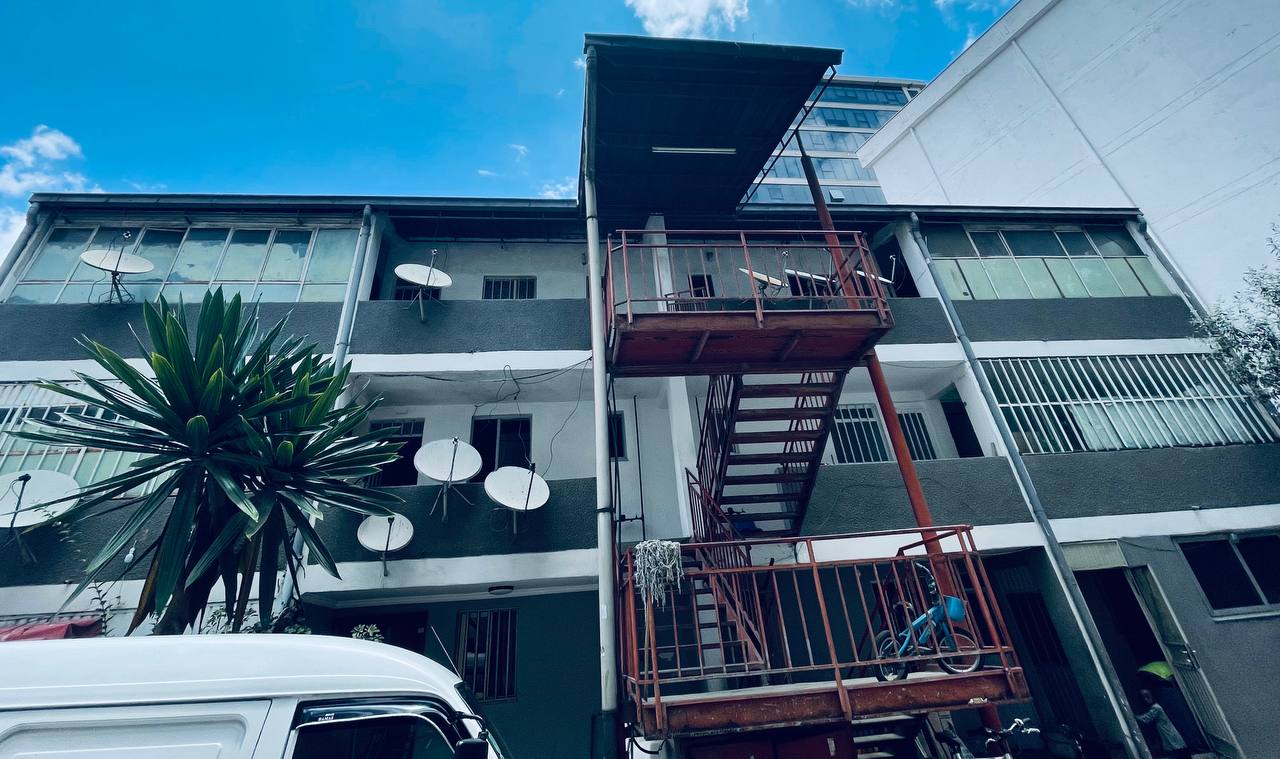
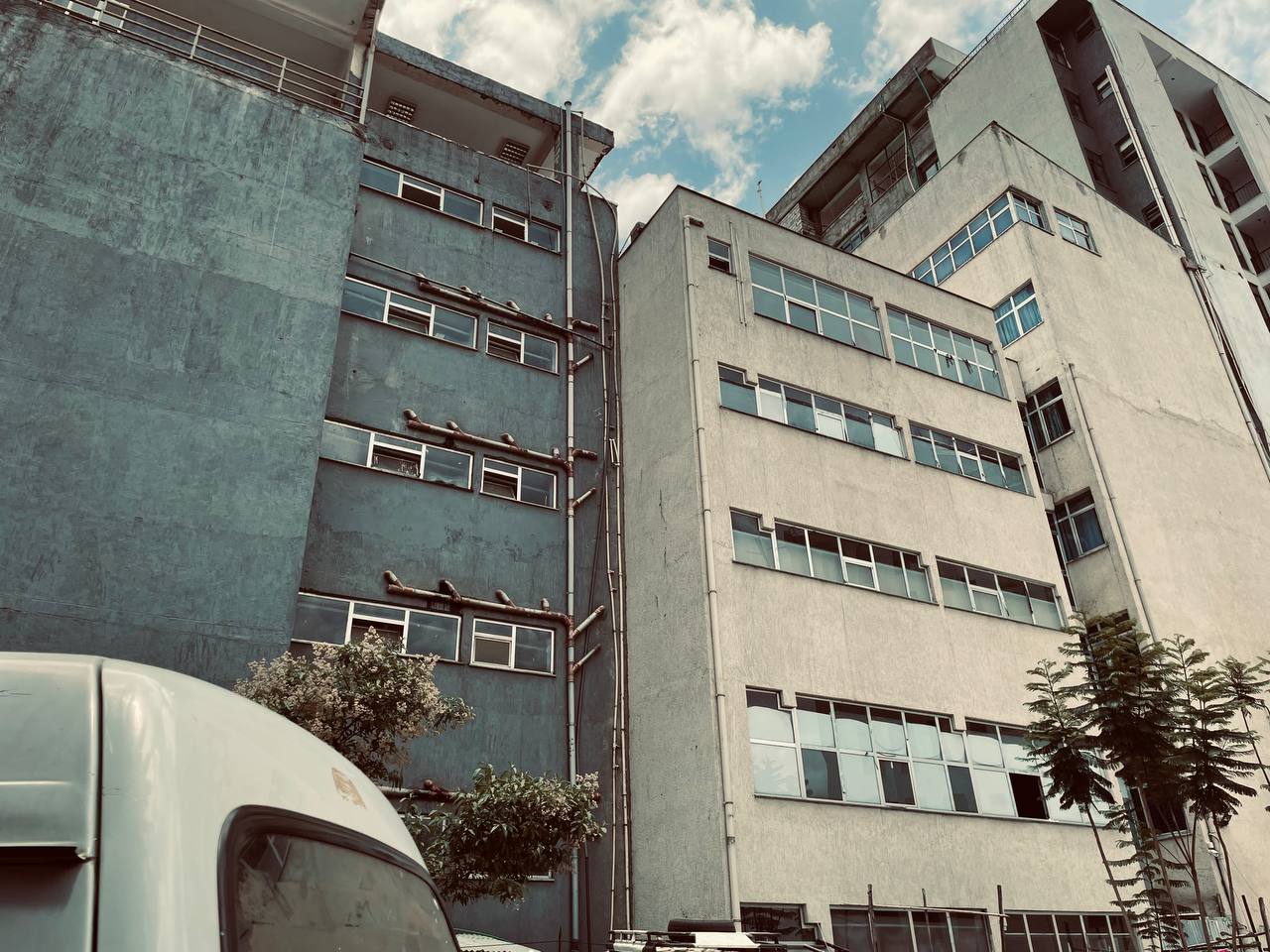
It is easy to talk about housing in aggregate. The Integrated Housing Development Programme, launched in 2005 under the Meles-era Urban Development Policy, delivered over 220,000 condominium units in Addis Ababa by 2022, housing an estimated 852,000 people roughly one in six residents of the city at the time. The complexes now span over fifty sites across the city: from Jemo in the southwest, to Gerji and Koye Feche in the east, to Lemi Kura and Arabsa in the north. That is not nothing. In the neighborhoods where it worked, families traded mud walls and shared courtyards for concrete homes with legal deeds. The transformation is real and visible.
But the aggregate conceals the operational failure underneath it. The World Bank projects that Ethiopia needs approximately 486,000 new housing units per year between 2025 and 2035 to keep pace with population growth and urbanization. Actual supply runs at roughly 165,000 annually. In Addis Ababa alone, the housing deficit exceeds 140,000 units every year. The city's population, currently around 5.7 million, is growing at 4.1 percent annually, one of the fastest rates on the continent.
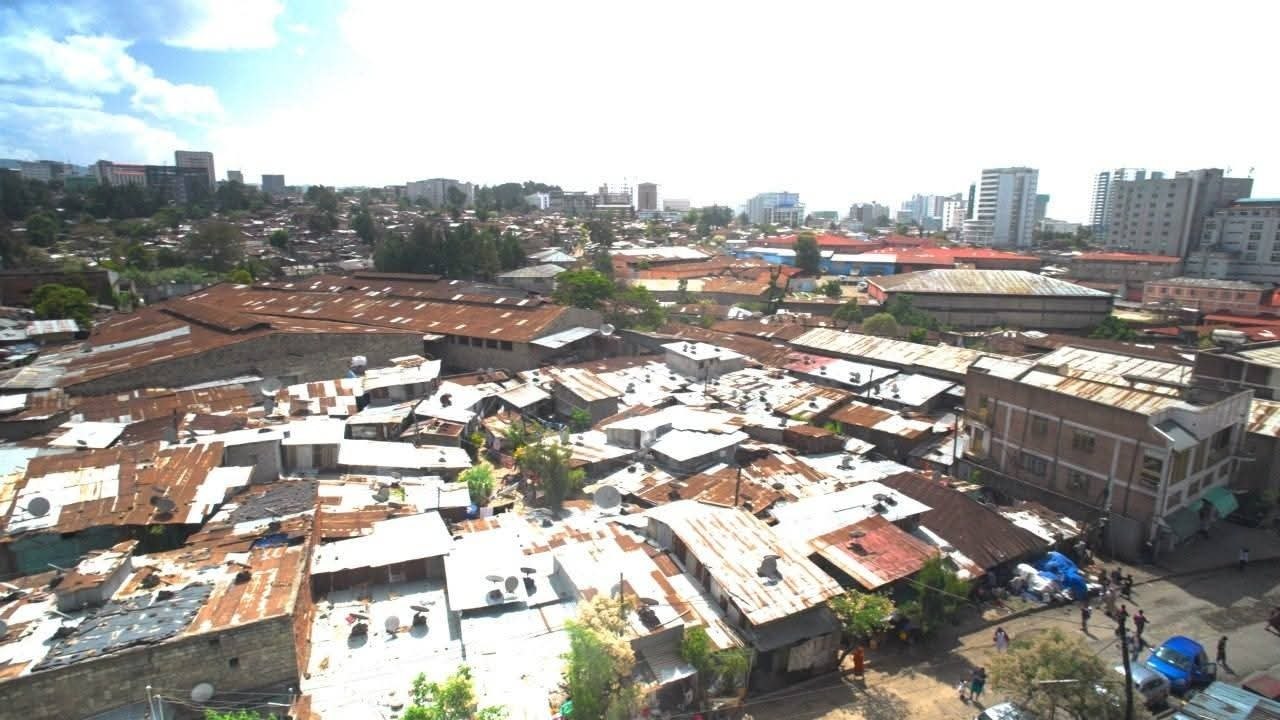
The 2024 TeMA journal study, drawing on satellite imagery from 2011 to 2022, found that informal settlements still covered 59 percent of Addis Ababa's residential land. In 2010, 67.9 percent of the city's population lived in informal housing. A decade of construction has barely moved that number. And the inner city tells a sharper version of the same story: the area around Merkato and Teklehaimanot, covering just 12 percent of the city's land, is home to 40 percent of its population, most of it in government-owned mud housing.
Then there is the Bole Ayat 2 problem, a name that should appear in every policy discussion about the IHDP and almost never does. In Lemi Kura Sub-city, Woreda 03, over 7,000 40/60 condominium units were handed over to beneficiaries six years ago. As of October 2024, most residents still cannot move in. Capital Newspaper reported that more than 1,800 units lack doors and aluminum windows. The buildings some up to fifteen stories have no functioning elevators and no reliable water or electrical connections. The Addis Ababa Housing Development and Administration Bureau (AAHDAB) responded by threatening owners with lease termination if they didn't occupy their units by November 9, 2024. The units had been declared complete. The infrastructure around them had not been built.
This is the gap the aggregate hides. A unit classified as "transferred" is not a home. Mayor Adanech Abebe acknowledged in 2022 that previous projects had been handed to buyers despite buildings lacking lifts and windows. She also disclosed that the city administration carried debts of $1 billion from partially completed housing projects left unfinished due to funding shortfalls. The buildings exist. The city doesn't.
The human cost of that gap appeared in the conversations I had while working on this essay. A man in his forties who waited ten years for his name to be drawn from the lottery described it this way: "You don't wait. You just live. And sometimes they call you." By the time his number came up, his children had grown and his workplace had relocated. A woman in one of the condominium blocks won her unit years earlier and found, in practice, that winning was only the beginning of a new set of pressures: 8.5 percent mortgage payments on a government loan, combined with the cost of commuting daily from the periphery to where her work actually was, made the unit financially unsustainable. She rented it out and moved back closer to her job. The system had given her an asset. It had not given her a home.
Three Bottlenecks, One Broken Machine
The housing shortage in Addis Ababa is produced by three interacting constraints. Each one is real. Together, they are self-reinforcing.
The first is land. Since the 1975 nationalization under the Derg, the Ethiopian state holds a total monopoly on urban land. There is no private land market. Individuals and businesses can hold 99-year leases; they cannot own the land underneath their homes. This means that when the public construction pipeline stalls because of funding gaps, political friction, or administrative overload there is no alternative channel through which supply can grow. The entire housing system depends on the state's willingness and capacity to move, and when the state stalls, everything stalls with it.
The consequences are not abstract. The 2025 working paper by Tegegne Gebre-Egziabher for the African Cities Research Consortium found that informal settlement area in Addis Ababa grew 224 percent between 2002 and 2022 from 2,260 hectares to 7,329 hectares primarily by converting farmland at the city's edges. The formal system cannot absorb demand fast enough, so demand routes around it. What policymakers call "illegal construction" is, from another angle, the market filling a gap the state created.
The land monopoly is not unique to Addis Ababa, and its consequences are not inevitable. Medellín operated for decades under a system where the state controlled land allocation and private development was constrained. The city's shift came when planners separated the land-servicing function from the construction function. Under the plusvalía mechanism, a levy on the value increase that accrues to private landholders when the state invests in nearby infrastructure Medellín redirected a portion of real estate appreciation from luxury development back into social housing infrastructure. A World Resources Institute analysis found that the Ethiopian government already controls land titles in a way that gives Addis Ababa more leverage than most developing cities to implement exactly this kind of mechanism. The legal foundation exists. The political will to use it does not.
The second is foreign exchange. The shell of a condominium can be built with locally sourced materials. The systems that make it livable; elevators, transformers, electrical panels, plumbing fixtures cannot. They are imported, and their import depends on foreign currency allocations centralized through the National Bank of Ethiopia (NBE). When those allocations are delayed or suspended, construction stops. Buildings sit structurally complete and functionally dead.
The Arabsa Sefera Mariam site in Lemi Kura illustrates this precisely. The complex over 439 blocks and 320,000 residential spaces was taken over from contractors at the end of 2022. Residents displaced by corridor development projects were given units at Arabsa. The buildings had been constructed but the systems that make them habitable were stuck somewhere in an import queue.
The NBE's July 2024 forex reform floating the birr, introducing auction-based allocation has improved the macroeconomic picture. But the operational transmission problem remains: dollars released at the top of the system do not reliably reach the specific construction import orders that housing delivery depends on. In the first four weeks of 2026 alone, Ethiopia injected $640 million into the banking system through special auctions more than 80 percent of all foreign exchange sales in all of 2025. Yet on the factory floor and the construction site, the scarcity persists. The NBE has shown, with Directive FXD/04/2026, that it can design sector-specific allocation rules for service exporters. Dedicated priority allocation for construction imports tied to documented project completion timelines is the next step and a policy instrument that already exists in prototype form.
The third is the financial mismatch. The 20/80 and 40/60 savings schemes where applicants pay 20 or 40 percent upfront through formal bank savings to access a subsidized loan require documented, formal savings. A 2024 study in Addis Standard put the median wage in Ethiopia at 3,000 birr per month. The IHDP mortgage rate runs at 8.5 percent on government loans. In a city where the informal economy accounts for the majority of working residents' livelihoods where income arrives in cash, through rotating savings groups (iqub), through market stalls and daily labor a housing finance system that treats undocumented income as invisible is not a universal system. It is a system for a minority, dressed up as one for everyone.
Peru and Indonesia have confronted this directly. Peru's urban housing expansion in the 1990s and 2000s included mechanisms for community savings groups “juntas” whose collective repayment histories were accepted as collateral substitutes by participating lenders. Indonesia's national housing finance agency, Tapera, runs a comparable scheme for informal sector workers, treating group savings records and community documentation as proxies for individual income proof. Neither model required dismantling formal savings requirements both required recognizing that informal savings are savings. Addis Ababa's iqub networks already function as exactly this kind of documented collective savings mechanism. They are invisible to the housing finance system by design, not by necessity.
Why the Machine Keeps Running
A broken system that persists is not a mystery. It is a system where the people who benefit from its continuation are better positioned than the people who suffer from it.
Construction in Addis Ababa is the city's largest employer. A 2022 World Bank note confirmed that the Ethiopian Construction Works Corporation, the state-owned firm that builds most IHDP units, has an incentive structure tied to construction volume, not occupancy outcomes. A building under construction generates wages, contracts, and government growth statistics whether or not it is ever completed or inhabited. The incentive for the Housing Bureau is not "how quickly can people move in" it is "how many units are currently under development." Those are different objectives that produce different behaviors.
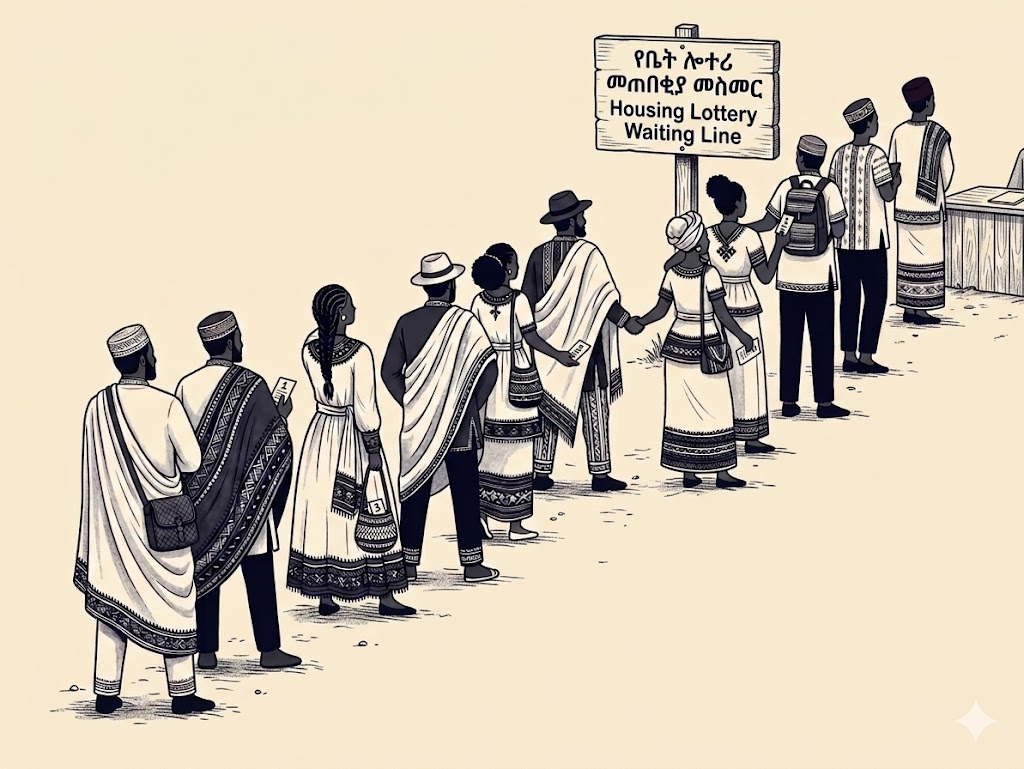
The lottery performs a separate function. By maintaining a registration list and periodically drawing names, the system converts a crisis into a queue. A queue is orderly. It implies a process. It gives people a reason to keep waiting rather than demanding an alternative. And since the state controls all land, there is no alternative to demand. The lottery is not just a distribution mechanism. It is a legitimacy mechanism, it makes delay look like fairness, and it keeps 70 percent of the city politically patient while the system falls further and further behind the demand it created.
What a Delivery-Oriented System Would Look Like
The goal is not a perfect system. It is a system where a family entering the housing process can see, with reasonable confidence, when and under what conditions they will be housed. That requires three specific changes.
First, separate land provision from construction management. The state retains ownership of land, this does not change. What changes is the role the state plays. Instead of managing construction directly, AAHDAB's function becomes servicing and allocating plots: providing sites with roads, water connections, and electrical infrastructure, then allocating them to qualified cooperatives and private builders under defined timelines and enforceable completion conditions. Failure to meet timelines results in reallocation. The state's enforcement capacity replaces its construction capacity as the primary lever.
This is not a theoretical proposal. The Lincoln Institute of Land Policy's analysis of the Lideta redevelopment project in Addis Ababa documented that land value capture mechanisms are legally feasible under existing Ethiopian land lease law the government already collects lease fees when it transfers land to developers. The mechanism for redirecting a portion of those fees, specifically the appreciation created by public infrastructure investment in luxury corridor zones, toward peripheral housing servicing already has a legal skeleton. What it lacks is deliberate design and political commitment to use it for housing rather than general revenue.
Second, replace the lottery with a transparent, points-based queue. Position in the queue is determined by waiting time and documented need crowding conditions, number of dependents, documented displacement history. The system is visible: every applicant can see their position and the criteria that determine it. Crucially, informal sector workers are assessed through community documentation iqub records, neighborhood association attestations, utility payment histories rather than excluded for lacking formal employment contracts.
The queue moves on a published schedule tied to actual delivery capacity, not aspirational targets. If the city can deliver 15,000 units in a given year, the schedule reflects that. The 48-month wait becomes a known 48 months, not an indefinite one. That distinction matters enormously for how families plan their lives.
Third, fund peripheral infrastructure through a formal land value levy on luxury development. The Addis Ababa Corridor Development Project, the flagship urban renewal initiative reshaping Meskel Square, Piassa, and the CMC Road, is generating enormous land value appreciation for commercial developers along its path. A formal plusvalía-style levy on that appreciation, structured as an additional lease premium on commercial plots in high-appreciation zones, generates a dedicated fund for the roads, water connections, and electrical infrastructure that make places like Arabsa habitable. Medellín used this instrument to finance social housing infrastructure for the Avenida 80 Tram Corridor project. São Paulo's Outorga Onerosa mechanism, a fee developers pay to build above standard floor-area ratios channeled BRL 2.9 billion into urban infrastructure between 2002 and 2014, though with imperfect targeting. The OECD's 2022 Global Compendium of Land Value Capture Policies explicitly identifies Ethiopia as a country where land readjustment tools are already in active use, meaning the institutional framework is not absent, it is underdeployed.
The risk of the first reform, separating land provision from construction is real: without serious enforcement, it produces uneven quality and informal sprawl. The mitigation is in qualification criteria and inspection regimes, not in keeping the state as primary builder. The same institutional model, applied to cooperative housing, is the right analogy.
Conclusion: More Than a Number
My family was lucky. Eventually, our name was called.
But even that moment came with a strange feeling. Relief, yes. And then the quiet question: what was lost in the years between the application and the answer? Not in the abstract. What specifically: the savings that didn't compound. The school years are shaped by crowded rooms. The decisions that couldn't be made because nothing felt stable enough to build on.
We don't measure that. We measure units built and units transferred, but we don't count the shape of a life organized around uncertainty. We don't tally the risks not taken, the investments not made, the ambitions quietly adjusted downward because a foundation never arrived.
Addis Ababa is still growing. The cranes above Meskel Square are real. The new light rail extensions are real. But growth and progress are not the same thing. A city can build continuously and still be organized around delay if the system underneath is designed to administer rather than deliver.
The IHDP delivered 220,000 units in seventeen years. The city needs 140,000 more each year just to stay even. The math doesn't close through construction alone. It closes when land servicing is separated from construction management, when finance mechanisms recognize how the majority of the city actually earns and saves money, and when the value created by the city's most expensive new developments is formally connected to the infrastructure needs of its most underserved.
Housing should not be a lottery. Not because randomness is unfair, though it is. But because a lottery is what you use when you have given up on building a system that works. It is the signal that land policy, housing finance, and infrastructure provision have each, separately, failed to function and that the gap between what was promised and what was delivered has grown too large to close by any means other than chance.
That gap is not inevitable. It is designed. And what is designed can be redesigned.
A home is not the end of the journey. It is where everything else begins. The work is to build a system where the beginning doesn't depend on luck.